This is an instructional design research on translation strategies and advantages that generative AI introduces to localize eLearning.
Purpose
- -
I conducted this research to analyze the current and future state of translating and localizing eLearning. The research focuses on how generative AI simplifies creating localized e-learning that is adaptable, scalable, software agnostic, automatic, and cost-effective for companies with a global workforce. Instructional designers and trainers using manual, neural machine translation, or XLIFF can benefit from adopting an AI-based no-code interface that translates and localizes text and documents using style guides, tone, and voice to produce a more accurate translation.
Process
- - -
My process included reviewing existing scholarly research on the topic and attending a webinar with a company leading in using generative AI to translate and localize eLearning material. I also explored effective strategies using Google Neural Machine Translation and Microsoft Azure Language Studio. My research also included the following:
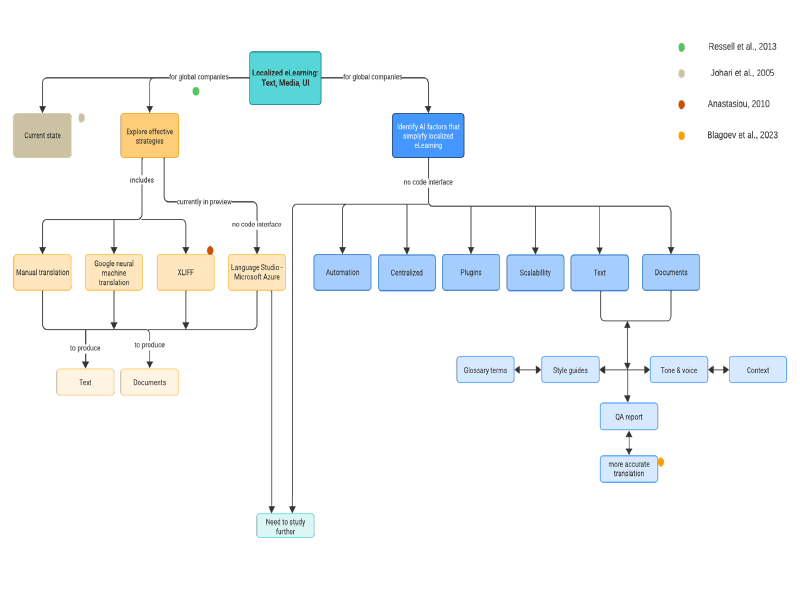
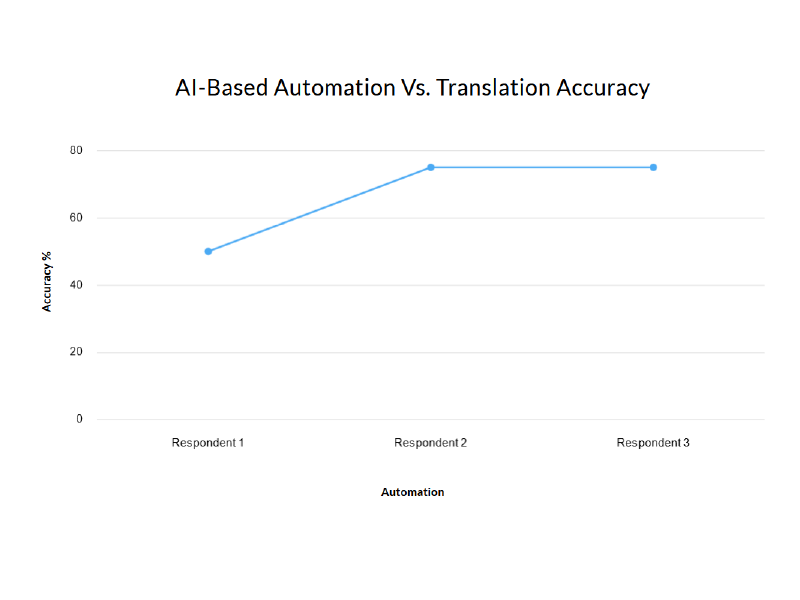
A concept map A survey Sample size Qualitative and Quantitative data analysis Ethical considerations